How Does an Outdoor Wasp Trap Help Keep Gardens and Outdoor Areas More Comfortable?
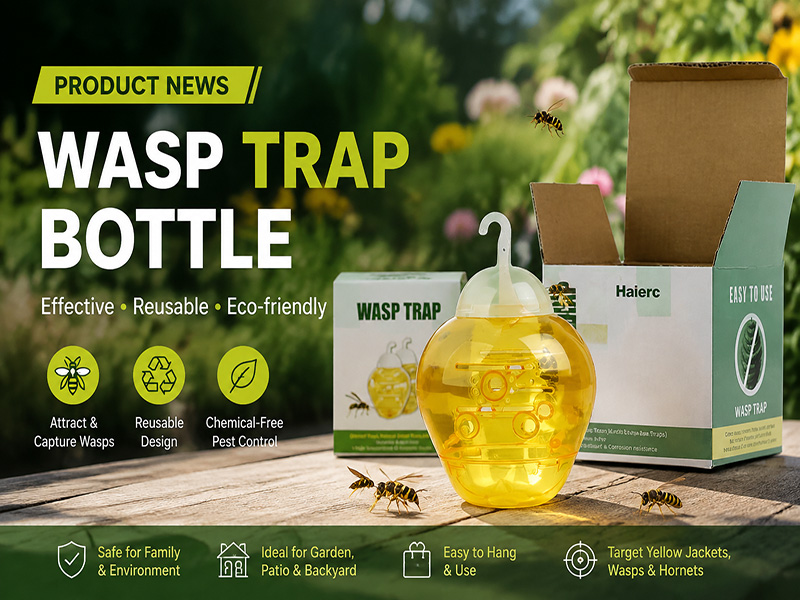
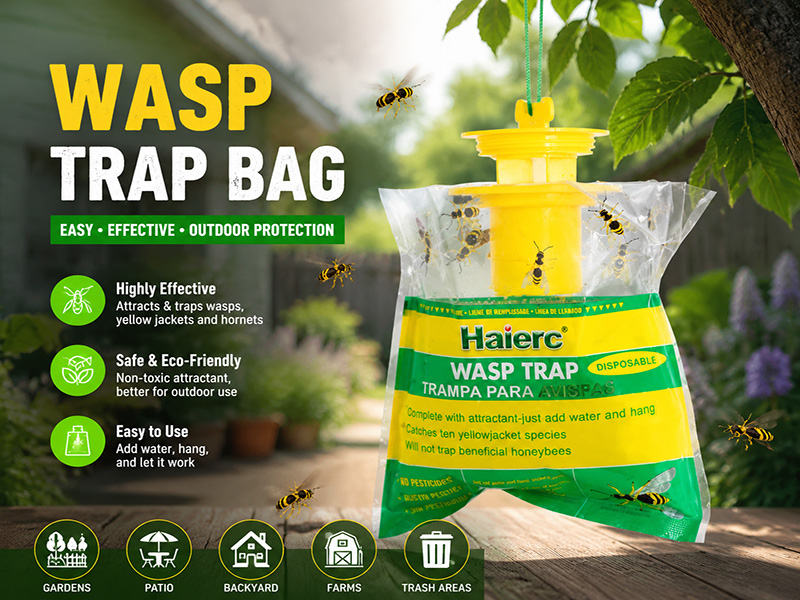
How does a wasp trap work? Most traps use an attractant to draw flying insects toward the entrance. Once insects enter the trapping chamber, the design makes it difficult for them to escape. Depending on the trap type, users can add sugar water, orange juice or another suitable attractant. This makes a reusable wasp trap particularly convenient for seasonal outdoor pest control.
The Haierc Bee & Wasp & Moth Trap is designed for multiple outdoor applications. It can be hung under eaves, from trees or around gardens, orchards and outdoor dining areas. The transparent PP + PET body also allows users to check the trap without opening it frequently.
Why choose a bee and wasp trap instead of relying only on sprays? A physical trap provides a localized approach to managing flying insects. It does not require spraying an entire outdoor area, making it a useful option for gardens, patios, farms, camping grounds and other places where people regularly spend time.
The trap can also target more than one type of flying insect. Depending on the attractant used, it may be suitable for wasps, bees, moths and other flying insects. Two size options, HC4203 and HC4203S, provide additional flexibility for different applications.
For distributors and pest control suppliers, the product is available for bulk purchasing and can support customized packaging and OEM/ODM projects.
If you are comparing wasp catcher, bee catcher, moth trap and outdoor insect trap options, consider the trap size, material, placement method and attractant before selecting a product. A simple reusable design can be an effective addition to a broader pest management strategy.